
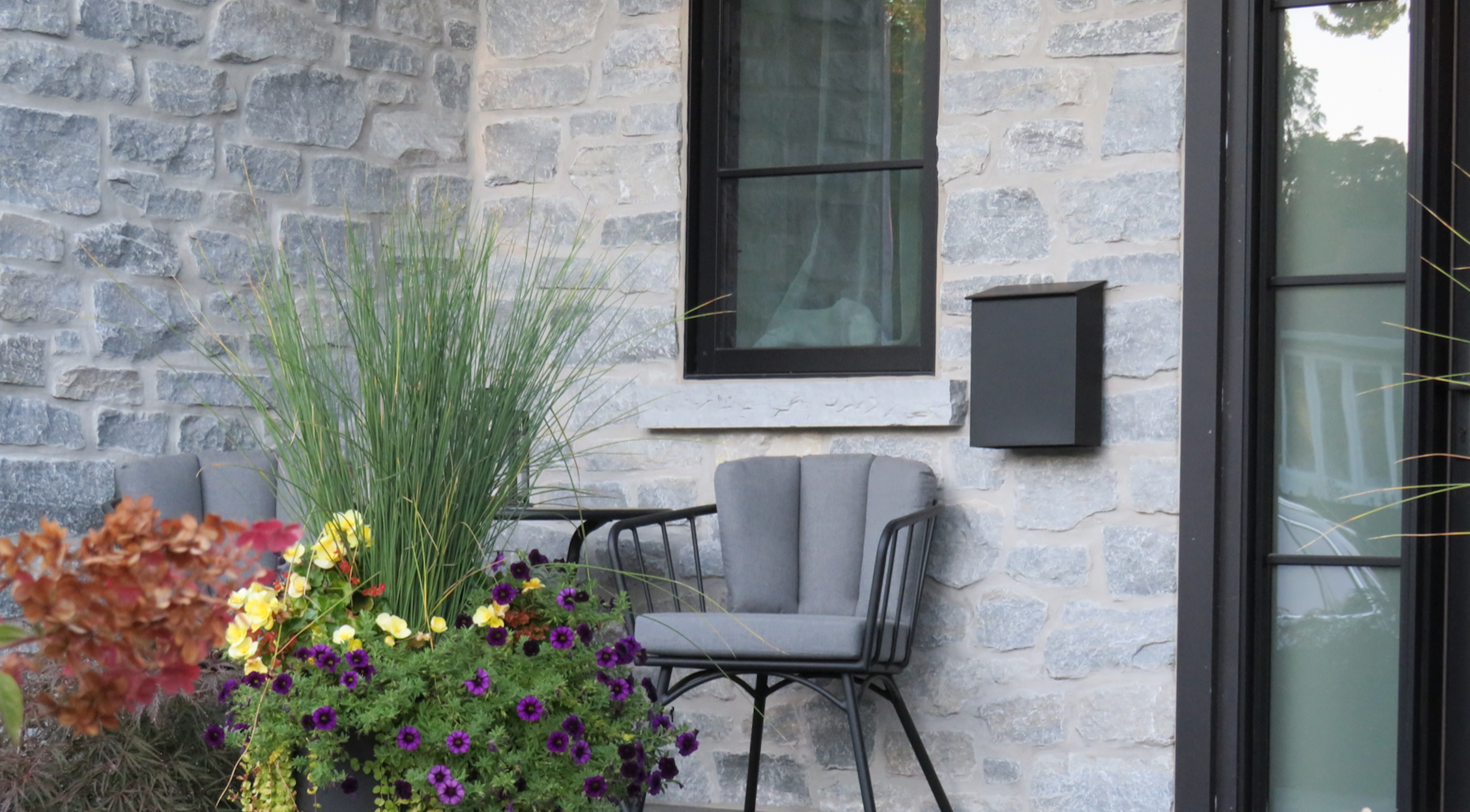
Mortar Colour & Mortar Strategy: The Design Decision Hiding in Plain Sight
The Mason's Bench — Secrets of the Trade
You will agonize for weeks over your natural stone veneer blend — and then let somebody's default grey decide fifteen percent of your wall. Here's the mason's guide to the most underrated choice in custom home design with natural stone: what goes between the stones.
Let me tell you the quiet truth of my trade: I can change how your stone looks without touching your stone. Hand me the same crate of real stone thin veneer and three different mortars, and I will hand you back three different houses — one calm and monolithic, one warm and heritage, one graphic enough to stop traffic. In a standard-jointed wall, mortar is ten to twenty percent of everything you see. It is the frame around every single stone, repeated a thousand times. And yet it's routinely chosen in the last five minutes of a project, by default, in grey.
Not on our watch. Whether you're a pro mason tightening your spec sheet or a homeowner planning your first wainscot, this is everything the trade knows about mortar colour and strategy — the colour companion to our mortar selection guide.
Why Colour Does So Much Work
Two perceptual effects run the whole show. First, contrast controls scale: a joint close to the stone's tone visually merges stones together, so they read larger and the wall reads calmer; a high-contrast joint outlines every stone, shrinking each one and turning the joint pattern itself into the design. Second, temperature controls mood: warm joints (buff, ivory, tan) push a wall toward heritage and hospitality; cool joints (grey, charcoal) push it modern and architectural. Same quarry-direct real stone, entirely different building — look:
Three strategies, one crate of stone. Cover the labels and you would swear the stone itself changed.
The Three Strategies
Match, blend, or contrast. The blend column is the professional default for a reason: it flatters the stone and forgives the job site.
- Match — joint tinted to the stone's mid-tone. Stones merge, joints vanish at distance, the wall goes quiet and formal. The classic move for limestone and the safest play for full bed building stone on traditional facades. Its risk: on multi-tone blends there is no single tone to match, and a mismatched "match" looks like a mistake rather than a choice.
- Blend — half a shade darker than the stone's mid-tone. The professional default, and the advice I give when someone hands me the decision: darker-not-lighter makes stones read larger, hides job-site variables, forgives the colour drift between crates that natural stone for house construction always carries, and never embarrasses anyone. When in doubt, blend down half a shade.
- Contrast — a joint deliberately lighter or darker than everything in the blend. High risk, high style: ivory joints on charcoal granite, charcoal joints on cream limestone. Done well it's the boldest wall on the street; done casually it's visual static. Contrast is a decision you make with your designer and a cured sample board — never with a colour chart in a supply yard.
The Colours, and What Each One Actually Does
| Colour | What It Does | Best With |
|---|---|---|
| Standard grey | The default — neutral, cool, honest. Fine with grey stone; deadening on warm stone | Granite, cool-toned ledgerock |
| White / ivory | Brightens, formalizes, shows dirt and efflorescence first | Cream limestone, formal traditional work |
| Buff / tan | The great warmer — flatters nearly every sedimentary stone; the limestone default | Weatheredge / Harvest Gold limestone, sandstone |
| Brown | Deep, rustic, earthy; hides splash and weathering gracefully | Weathered fieldstone, rustic blends |
| Charcoal / slate | Outlines and dramatizes; shrinks stones; reads contemporary | Modern designs, contrast strategies |
A word on how colour gets into the bag: masonry mortars are coloured with iron-oxide mineral pigments — from specialists like Solomon Colors and Davis Colors — either factory-batched into pre-coloured mortar or added on site. Factory-coloured wins for consistency every time; site-pigmenting is for masons who weigh, not scoop. Mineral pigments are UV-stable for the life of the wall — the fading you've seen on old walls is usually lime bloom and dirt, not pigment failure.
Brands Worth Knowing
- King (Sika Canada). The Canadian benchmark, engineered for our freeze-thaw reality. Their colour-matched masonry mortars cover the full range above, and King MasonBond 400 is our house recommendation for setting adhered veneer — the same product we spec in our mortar selection guide.
- Spec Mix. The production standard on commercial sites; excellent batch-to-batch colour control and a deep custom-colour program through Solomon pigments.
- Amerimix and Quikrete. Widely available, dependable pre-blended options; Quikrete for accessibility everywhere, Amerimix for a strong coloured pre-blend program.
- Your local batch plant. For big full-bed projects, plant-batched coloured mortar delivered wet can out-consist everything — if the plant documents the mix and holds the recipe for your entire job.
Whatever the brand: for adhered real stone thin veneer, your setting mortar is chosen for bond (polymer-modified, veneer-rated) and your pointing mortar is chosen for colour and workability. They are allowed to be different products. Most of the best walls are set in one bag and pointed from another — a masonry tip that surprises even some pros.
Pairing With What's on Your Wall
The blends our customers actually order, and where I'd start the colour conversation for each — start, because your brick, roof, trim, and light do get a vote:
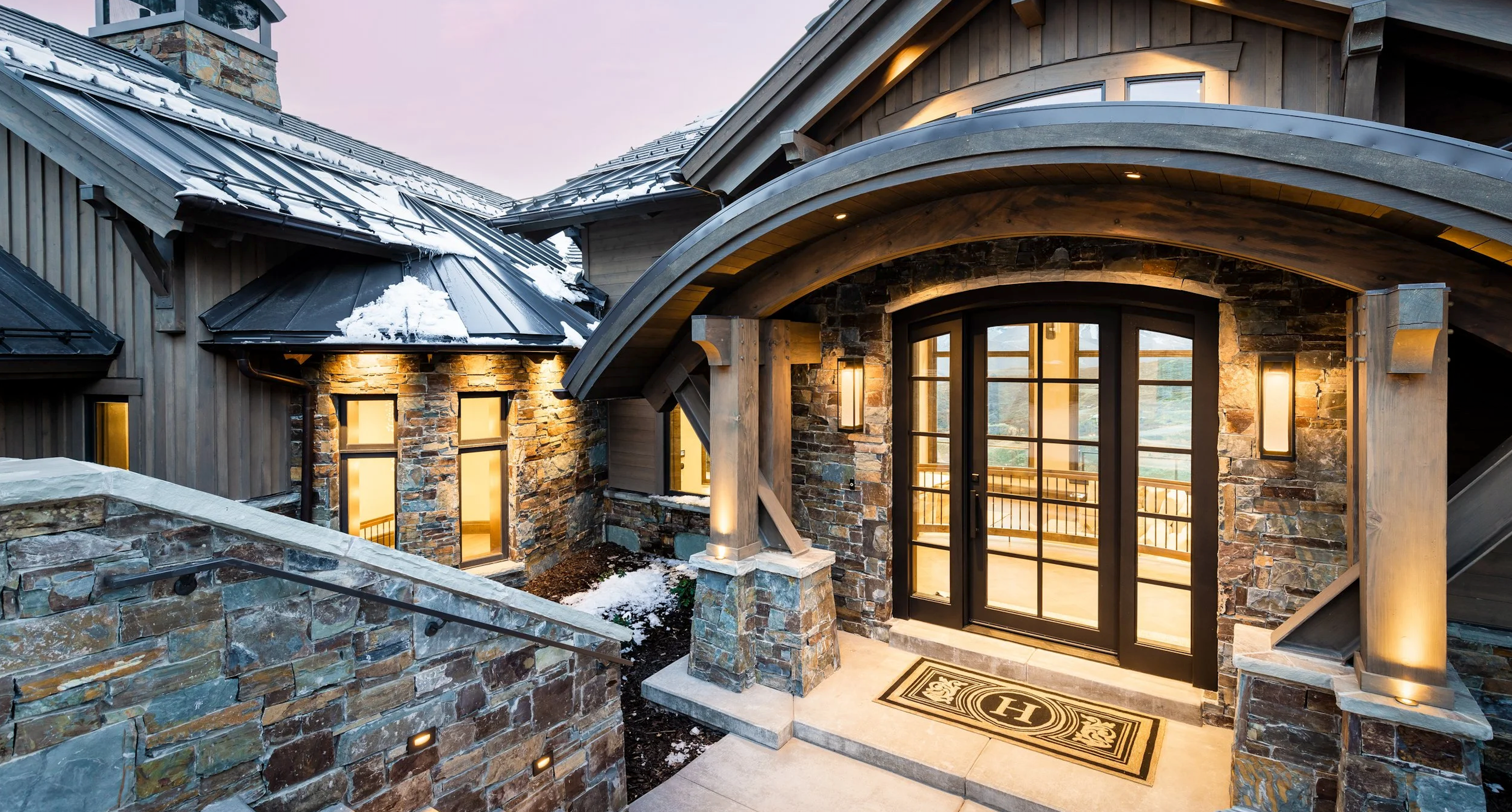
- Weatheredge and Harvest Gold limestone — our signature Manitoulin Island blends and perennial top sellers — carry warm cream-to-gold faces that buff and ivory joints flatter enormously; a matched pale grey goes formal, and charcoal contrast goes boldly modern. Browse the limestone blends.
- Earth-tone sandstone blends — including our premium Collingwood weathered-face brown sandstone — want earth: buff through brown joints that let the weathered character lead. Bright white fights these stones; don't. Browse the earth tones.
- Elite Blue granite and Midnight Black blends sit naturally with matched greys for monolithic modern walls — or take the ivory-contrast treatment if the design brief calls for a statement. See Elite Blue and Midnight Black.
- Full bed building stone plays by the same rules with one addition: joints are wider and mass is real, so colour moves are amplified. Blend conservatively unless the drawings say otherwise.
And remember that colour interacts with joint style: dry-stack has no visible joint — the colour decision disappears; overgrout makes mortar a third of the visible wall — the colour decision is the design. (Overgrout is having its moment: our trending 2026 look is the Creemore Estate Blend under a slurry-over German smear.) Standard joints live in between, which is exactly why this article exists.
The Testing Protocol (Non-Negotiable)
- Build a sample board — a square metre of scrap, lathed and scratched, set with your actual stone.
- Point it with your two or three candidate colours in labelled zones.
- Let it cure and fully dry — wet mortar runs one to two shades darker than its final colour, and every mortar-colour regret in history traces to judging it wet.
- Judge in daylight, at the house, at viewing distance — morning and late afternoon, because low sun deepens joint shadows and changes the read.
- Photograph it. The camera flattens the wall the way visitors' eyes will.
Keeping the Colour You Chose
Consistency secrets from the production side of the trade: buy every bag from one production lot and enough for the whole job; measure water identically every batch (water ratio shifts cured colour more than most pigment errors); have one person strike all the joints at the same thumbprint-hard timing, because striking timing changes joint tone; and prevent efflorescence — the white bloom that overwrites every colour decision — with the drainage, clearances, and capped horizontals your wall needed anyway. Colour strategy and water strategy are the same strategy wearing different hats.
The Strategy Layer: One House, One Mortar Story
Everything above treats one wall. Custom home design with natural stone rarely stops at one wall — there's a brick field, a stone accent, precast sills, sometimes hardscape marching to the door. The trade secret at the whole-facade scale: let one joint colour carry the house. When the stone entrance surround, the brick field, and the pier caps all share a mortar tone, materially different claddings read as one composed building; when each trade brings its own default, the house reads assembled rather than designed. Pull your unifying tone from the material with the most joint area — usually the brick — and pair the stone blend to work with that joint, rather than fighting three colour wars at once. This is also the argument for settling mortar strategy at the drawing stage: it's a spec line that costs nothing on paper and a repointing bill after the fact.
Additions and renovations run the same play in reverse: the new mortar must answer to the old. Weathered mortar has decades of patina no fresh bag matches straight out of the mixer, so pros sample against the cleaned existing joints, expect the match to converge over a couple of seasons, and bias slightly lighter — new mortar darkens with weathering; old mortar has finished moving. If you're re-skinning tired brick with stone instead, that whole dance is optional.
Quick Answers
Can I change mortar colour after the wall is built?
Honestly? Only by repointing — grinding joints back and re-grouting — which is real money. Masonry stains exist for joints but are a specialist repair, not a design tool. Choose with cured samples the first time.
Does coloured mortar cost more?
Modestly — typically a small premium per bag over standard grey. Against the cost of quarry direct real stone it rounds to nothing, and against the visual impact it's the best money on the project.
Who decides — mason, designer, or me?
The mason executes what the cured sample board proves. If your builder or designer hasn't raised mortar colour, raise it yourself — you're now better briefed than most of the industry.
Here's the thing about the fact that you just read two thousand words on mortar colour: it tells us you're building something where details and design matter. That's precisely who Natural Brick & Stone Depot exists for — operated by ship2user since 2019, we don't just move rocks. We're a conduit for efficient access to astoundingly beautiful, high-quality natural stone — quarried, processed, and crated with care and precision, destined to elevate your project. Call us. Let's talk.
Talk Stone — and the Mortar to Match
Tell us your blend, your brick, your vision. We'll help you pair the stone and the strategy — and get both to your site in one clean shipment.
Start the Conversation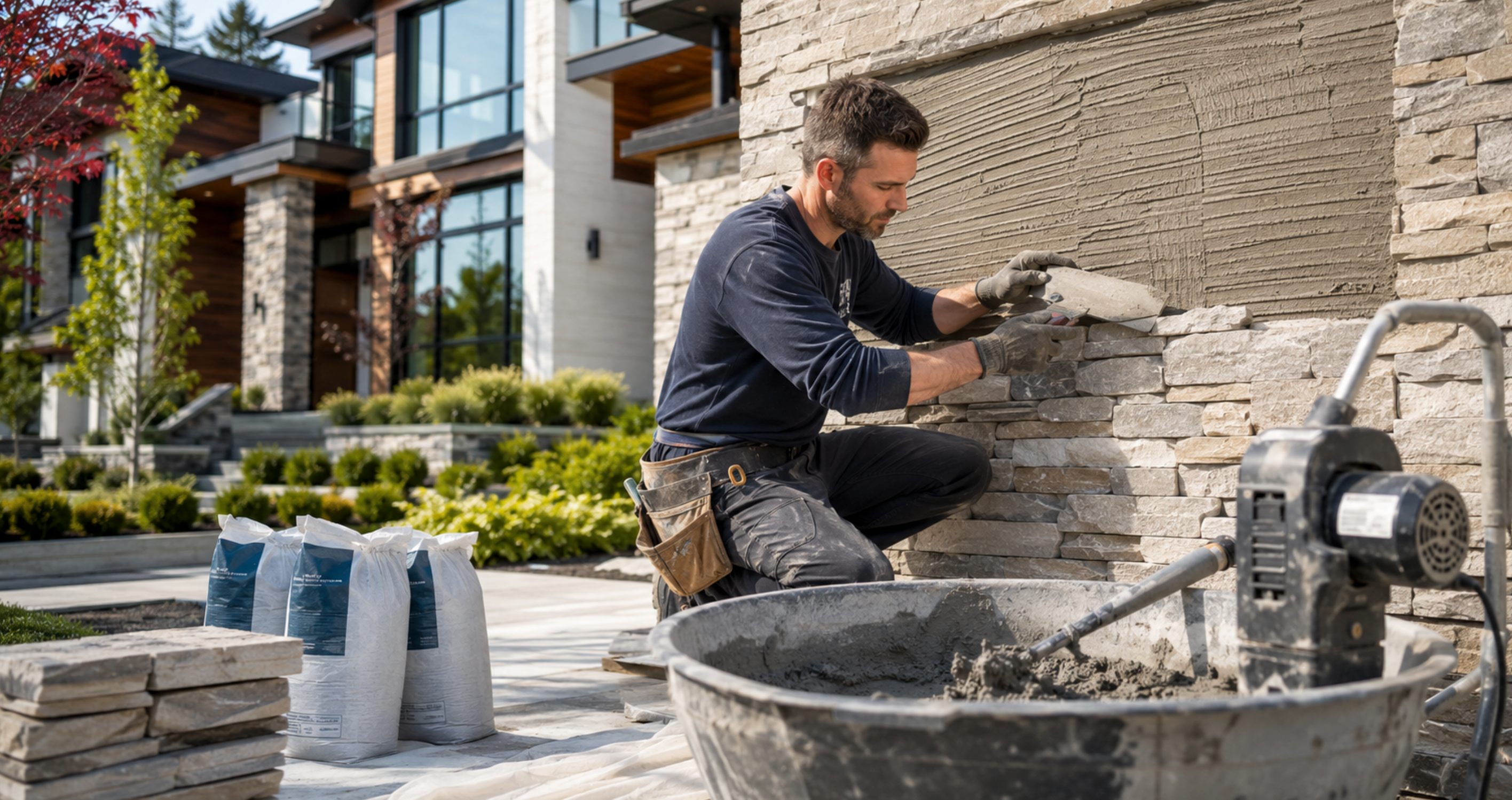
Leave a comment
This site is protected by hCaptcha and the hCaptcha Privacy Policy and Terms of Service apply.